The media dinner playbook: building credibility off the record
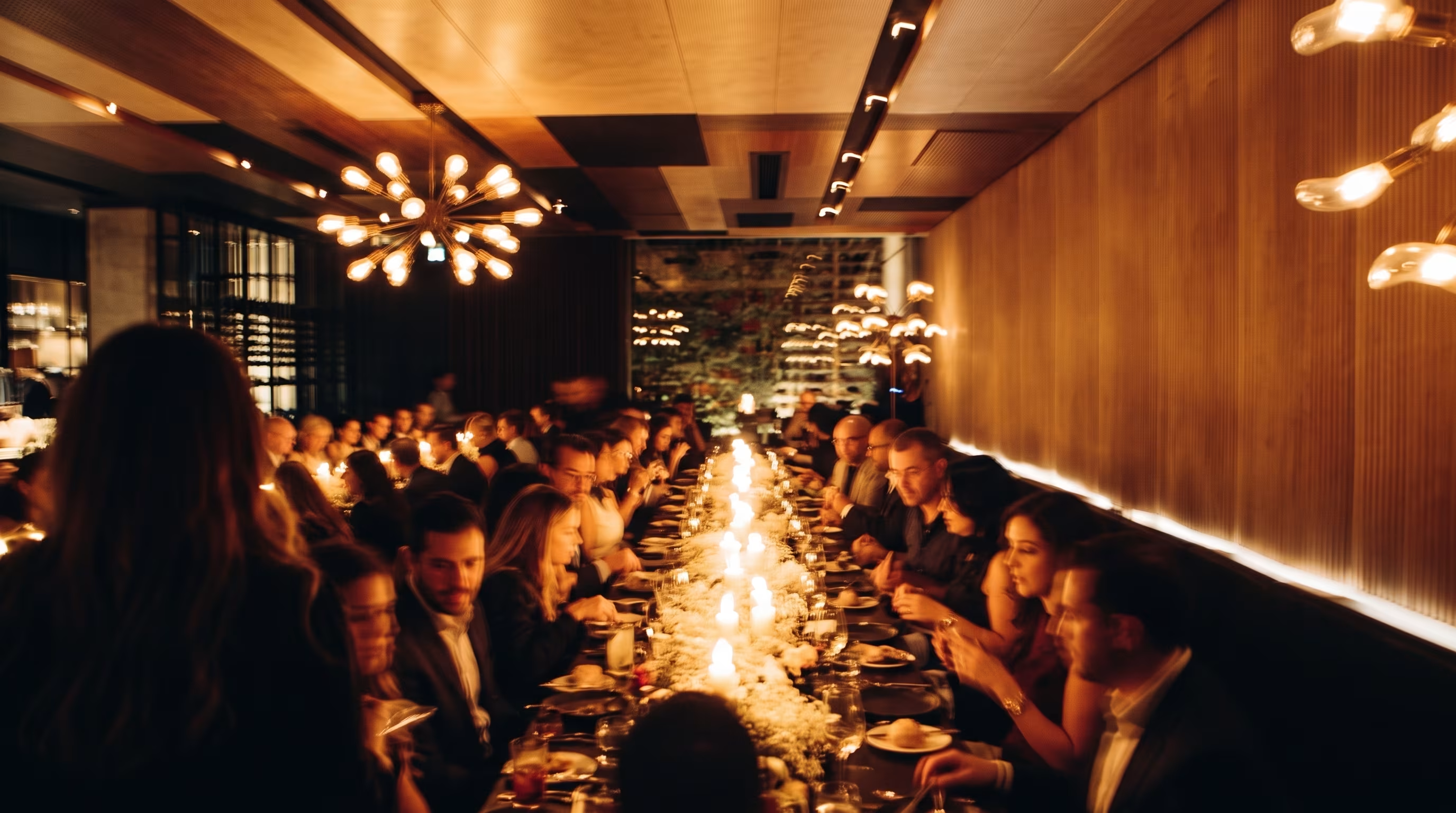
The most valuable conversation a journalist will ever have with your leadership team will never appear in print.
That sounds counterintuitive. We are in communications. You want coverage. Why would we engineer a situation designed to produce none?
Because the journalists who end up covering you most consistently, most accurately, and most generously are not the ones who received your press release. They are the ones who sat across a dinner table from your partners and walked away with a genuine understanding of how you think.
That is what a media dinner actually does. And most companies have no idea how to run one.
What a media dinner is not
It is not a press event with dinner attached. It is not a product launch with better food. It is not an opportunity to pitch twelve journalists simultaneously while they politely eat your bread rolls.
The moment a journalist feels like they have been gathered to receive a message, the evening is over. You may get through the courses. You may even get through the conversation. But you will not get what you came for, which is trust.
A media dinner works because it creates conditions that almost nothing else in PR can replicate. Journalists are off the record. Executives are off script. The conversation moves at its own pace. Nobody is performing for a deadline. And somewhere between the first drink and the end of the main course, the people in that room start talking to each other like people.
That is the outcome you are building toward. Everything else is execution.
The guest list is the strategy
Who you invite tells you everything about what you are trying to accomplish.
A room full of generalist reporters will give you a pleasant evening and limited strategic value. A room built around a specific beat, a specific city, or a specific moment in your industry's story will give you relationships that compound over years.
When we built the guest list for a media dinner on behalf of a leading seed-stage venture firm, we were not looking for the most famous journalists in venture capital. We were looking for the fifteen reporters whose coverage actually shaped how founders, LPs, and co-investors understood the market. Some of them wrote for household names. Some of them wrote for publications that most people outside the industry had never heard of. All of them mattered.
Fifteen is a number worth paying attention to. Large enough to create genuine energy in the room. Small enough that every person there has a real conversation with at least two or three others. Beyond twenty, a dinner stops being a dinner and becomes a reception. The intimacy is gone before anyone has ordered.
Preparation is what separates a good evening from a great one
Every executive in that room should know who they are sitting near before they arrive. Not a one-page summary of credentials. A real briefing. What has this journalist written recently? What questions are they working through in their reporting? What perspective have they expressed publicly that your leadership can genuinely engage with?
When a partner can walk up to a reporter and reference a piece they published three weeks ago, the conversation starts at a completely different level. The journalist knows they are not being worked. They are being respected. That distinction matters more than anything you will say over dinner.
Seating is a strategy too. You are not arranging a social gathering. You are engineering conversations. The partner who has the most insight on AI goes next to the journalist who has been covering AI infrastructure for the past year. The investor who lived through the last market downturn sits near the reporter who is writing about what the current cycle means for founders. Every seat placement is a deliberate decision.
The conversation should never feel managed
The best media dinners feel like the best dinner parties. The host sets the tone, asks the first provocative question, and then gets out of the way.
Discussion themes should be prepared in advance, but they should never be announced or presented as an agenda. The goal is to seed the conversation with something the room actually wants to debate. The state of AI investment. What the exit market is really telling us. Whether the current vintage will look like 2009 or something nobody has a reference point for yet.
When you get the framing right, journalists stop being journalists for an evening. They become participants. They share their own perspective. They push back on yours. And by the time the conversation ends, every person at that table has a more nuanced, more human understanding of who you are and how you think than any press release could ever communicate.
The follow-up is where most people drop the ball
A media dinner without a follow-up strategy is a very expensive social event.
In the days after, every executive should reach out personally to the journalists they connected with. Not a pitch. Not a press release. A continuation of the conversation. Something that references what was discussed at the table and adds a new layer to it.
The journalists who attended are now primed. They have context. They have a relationship. When your next announcement lands in their inbox, they are reading it differently than they were reading it before. And when they are working on a story in your space and need a source who will actually say something worth quoting, they know exactly who to call.
That is the return on a media dinner. Not the evening itself. The years of coverage that follow.
One thing worth saying plainly
Off the record does not mean unstrategic. Every great communicator understands that the conversations that never run are often the ones that shape everything that does. The dinner is where you build the foundation. The coverage is what gets built on top of it.
If your leadership team has something real to say about where your industry is going, and you want the journalists covering that industry to actually understand it, a dinner is one of the most efficient investments in media relations you will ever make.
CodePR has conceived, planned, and executed invitation-only media dinners for some of the most respected venture capital firms in the country. If you are thinking about building a more deliberate media relations strategy, let's talk.